
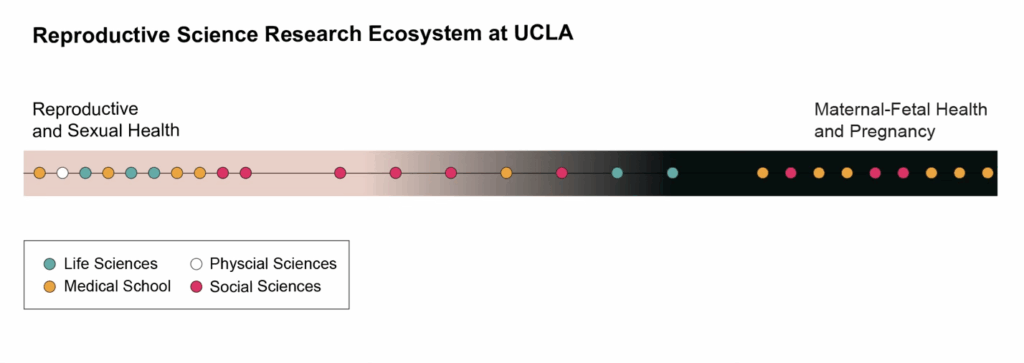
Reproductive science research at UCLA is a vibrant, interdisciplinary ecosystem representing a continuum of science that improves health of the reproductive system and sexual health to the science of family building, embryo, and fetal development as well as the science of maternal health during pregnancy. To represent this ecosystem, we present the below graphic where each dot signifies a faculty member who is either an experimentalist or social scientist at UCLA engaged in this type of research. The graphic is color coded by each faculty member’s primary appointment to highlight the cross-campus nature of the UCLA reproductive science community.
Reproductive Science and You
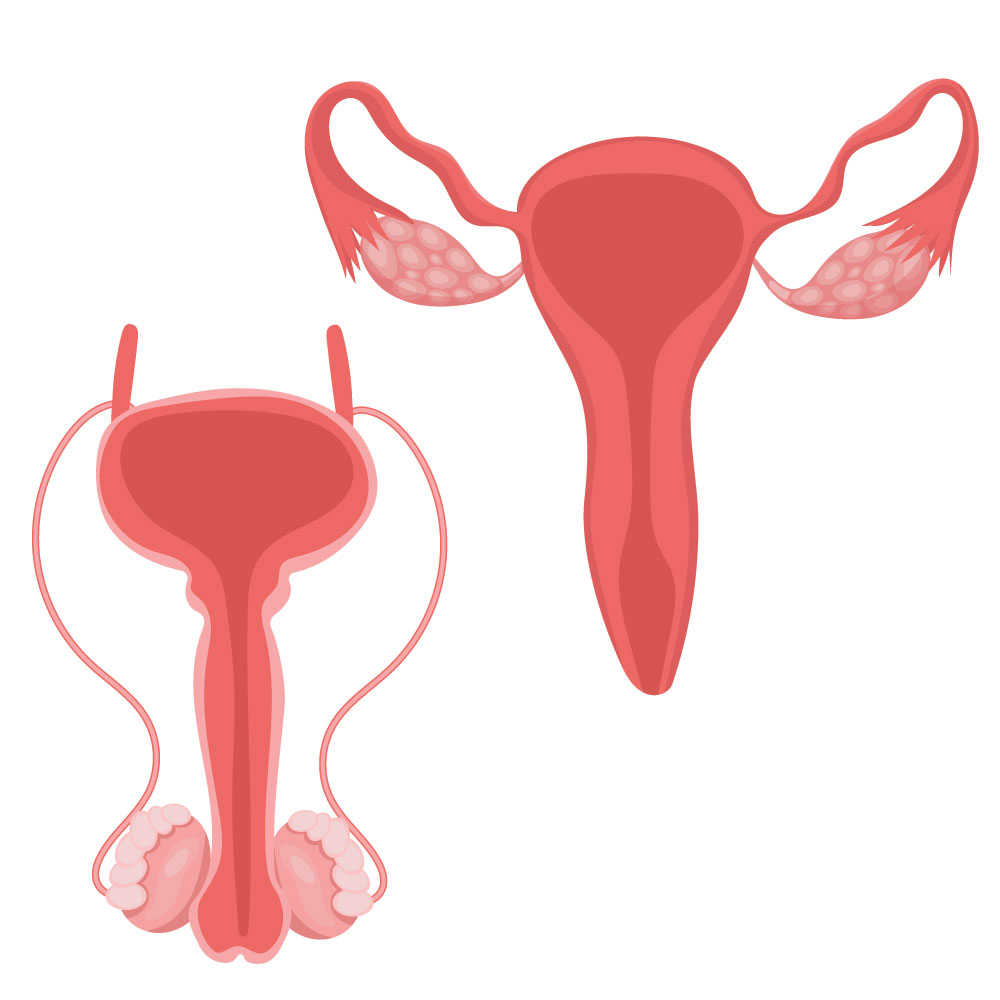
The reproductive system is a complex collection of organs with a very unique biology, and an endocrine system that links these organs together. At key life transitions, the organs of the reproductive system undergo tremendous change; notably during prenatal life, birth, at puberty as well as through the menopausal transition. Despite a healthy reproductive system being critical for overall health and well-being, we understand very little about the cell and molecular events involved in the formation and function of reproductive organs, the hormones that regulate them, and how aging, the environment, metabolism, stress and sleeplessness can affect them. Researchers in the Center are addressing these big questions through scientific discovery so as to promote reproductive health and reproductive longevity.
Becoming a Parent and Pregnancy
Families are planned and created in a variety of ways. In family planning, contraception has revolutionized a person’s ability to plan the number and spacing of children. Scientific research into new contraceptives methods is now critical to expand options and choice. Once the decision to start a family is made, some find it relatively straightforward whereas for others it is not. For some, the window for starting a family closes earlier than anticipated due to reproductive aging or being unable to carry a pregnancy to term. Scientists in the Center are developing models for contraceptive discovery as well as understanding early pregnancy loss, the intra-uterine environment, stress, inflammation and metabolism during pregnancy, and how these impact pregnancy outcomes. Scientists are also evaluating environmental exposures to the embryo and fetus and the consequences of these exposures on child health, and the health of future generations. The overall goal of this research is to unlock the science that can build healthy families and to extend the window of fertility.

Reproductive Science and Public Engagement
In partnership with the Institute for Society and Genetics at UCLA, scientists in the Center for Reproductive Science, Health and Education are incorporated fully in the process of understanding ethical, legal, and societal impacts of the applications of their research.
Current projects include the new biotechnology of in vitro gametogenesis as well as exploration of toxic exposures including stress and diet on the fetus and in descendants.