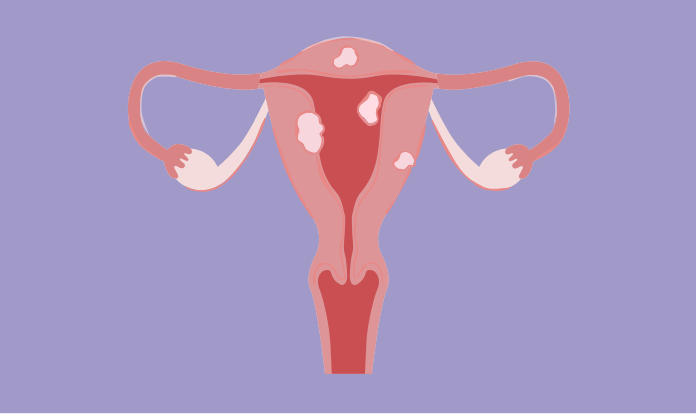
The CRSHE supports a wide range of research focused on reproductive science and health. By supporting new approaches—from lab-based models to computer-assisted clinical tools—the Center helps build knowledge and develop better ways to diagnose fertility problems, prevent cancer, and provide patient-centered reproductive health care.
The Science of Women’s Reproductive Health
Patrick Allard PhD is a scientist and environmental toxicologist whose research is at the intersection of genetics, epigenetics, developmental biology and environmental health. By leveraging model organisms and stem-cell approaches, his work examines how toxicant exposures disrupt germ cell function and propagate effects into future generations. Website: https://www.theallardlabatucla.org/
- Max Levenson (2023) examined how alcohol exposure during pregnancy can cause transgenerational reproductive defects. This work aims to inform strategies to protect reproductive health in women and their offspring.
Amander Clark PhD is a stem cell scientist and reproductive biologist whose research is focused on the molecular and cellular basis of reproductive organogenesis and how reproductive organ development in utero can affect future reproductive health and fertility. Results from her laboratory are designed to create scientific tools to generate better biomarkers of reproductive health and disease to inform better decision making. Website: https://clark.mcdb.ucla.edu/
- Isaias Roberson (2023, 2024) studies in vitro gametogenesis, which is the generation of gametes outside of the body. Outcomes from this research will include a better understand the in vitro niche during ovarian follicle formation in vitro.
- Qiu Ya (2024) is creating in vitro cell types that can be used to model human ovarian somatic cell formation and function. The goal of this research is to create tools to understand the human genetics of ovarian development and disease.
Beth Karlan MD is a gynecologic oncologist whose research focuses on unraveling the genetic and molecular underpinnings of gynecologic cancers. Her goal is to translate genetic research into population-based genetic testing programs for cancer susceptibility genes. Website: https://profiles.ucla.edu/beth.karlan
- Chelsea Stewart (2023) investigated the gaps in fertility and reproductive health counseling for patients with genetic mutations that increase ovarian cancer risk. The goal of this research is to improve patient-centered counseling and inform interventions that better address the reproductive needs to this unique population.
Anne Lenore Ackerman MD is a surgeon in urogynecology and reconstructive pelvic surgery. Her research focuses on how host-microbe interactions in the genitourinary tract contribute to benign lower urinary tract disorders. Website: https://www.uclahealth.org/providers/anne-ackerman
- Alec Szlachta-McGinn (2023) is a urogynocologist, who investigated the role of Candida species in the pathogenesis of interstitial cystitis/bladder syndrome (IC/BPS). This work aims to guide the development of novel diagnostic and therapeutic approaches for this understudied disease.
Sandra Orsulic PhD is a cancer scientist whose research focuses on understanding ovarian cancer. The objective her work is to translate scientific discoveries int marker tools for early intervention and personalized treatment strategies. Website: https://orsuliclab.com/
- Alexandra Smick (2024) investigated how ovarian cancer begins in women with BRAC1 mutations. The goal of this work is to improve the diagnostic algorithm for cancer detection and to reveal new targets for cancer prevention.
- Michael Richardson (2025) aims to evaluate the potential protective role of the mucin MUC6 in cancer initiation in the fallopian tubes. The goal of this work is to determine the role of MUC6 mutations in ovarian cancer
Margot Quinlan PhD is a biophysicist interested in elucidating how actin-cytoskeleton assembly is regulated. Her work links cytoskeletal dynamics to broader questions of cell polarity and potential implications in human disease. Website: https://www.biochemistry.ucla.edu/Faculty/Quinlan/quinlanLab/index.html
- Merin Rixen (2025) investigated the dynamic changes in protein expression during egg development using Drosophila melanogaster as a model. The results of this work will be an ovarian proteomic atlas that will provide foundational insights for improving fertility diagnostics and treatments.
Radhika Rible MD is an obstetrician gynecologist with a specialization in family planning. Her research is focused on contraception access and use. Website: https://profiles.ucla.edu/radhika.rible
- Halina Yee (2025) investigated how GLP-1 agonists affect the endometrium of obese individuals. This work aims to evaluate effects of GLP-1 agonists on tissues that are likely susceptible to chronic use.
Karen Sears PhD is an evolutionary biologist who explores how developmental variation and evolutionary processes shape mammalian morphology and human health. Her lab uses a comparative framework to uncover how changes in development contribute to evolutionary innovation and congenital malformations in humans. Website: https://www.searslab.eeb.ucla.edu/
- Kobie Boslough (2025) examines the relationship between aging and female reproductive function in bats using innovative epigenetic clock-based age estimation methods combined with tissue phenotyping. The outcome of this research is to understand how bats avoid reproductive aging.
The Science of Men’s Reproductive Health
Sriram Eleswarapu MD is a physician-scientist whose research and clinical focus is male reproductive and sexual health. His research applies data science and artificial intelligence to improve patient outcomes and inform personalized decision making between clinician and patient. Website: https://eleswarapu.com/
- Ashley Appleton (2023) was interested in identifying a noninvasive biomarker of male factor infertility by characterizing the seminal and urinary microbiomes of fertile and infertile men. This work aims to inform new therapeutic strategies, particularly for conditions such as varicocele.
- Tommy Jiang (2023) focused on identifying men with varicocele who are most likely to benefit from observation, empiric medical therapy, or surgical repair. The aim of this work is to improve clinical decision-making and reducing unnecessary or invasive interventions for both male and female partners.
Andrew Goldstein PhD is a cancer scientist who studies how epithelial progenitor cells in the prostate are regulated by aging, inflammation and metabolic changes. His research contributes to our understanding of prostate cancer initiation and treatment resistance. Website: https://www.goldsteinlabucla.com/
- Shirley Zhang (2024) investigated how ancestry-specific germline mutations in HOXB13 alter prostate luminal cell differentiation and metabolism, thereby influencing prostatic fluid composition and male fertility.