Creating Advanced Reproductive Excellence (CARE) for Women
The Problem: A Massive Unmet Need
From endometriosis to menopause, infertility to ovarian cancer, women’s reproductive health care is replete with unmet need for better treatments. Millions of women live every day with limited or no options to improve their reproductive health, build the family they want, or enjoy healthy long lives. We can’t treat what we don’t understand: a lack of basic, fundamental knowledge about female reproductive biology has gone unaddressed for too long. A paradigm shift from symptoms to source must start at the very foundations of reproductive health. Our multidisciplinary research team is approaching this challenge by focusing on two vital keystones of reproductive bodies:
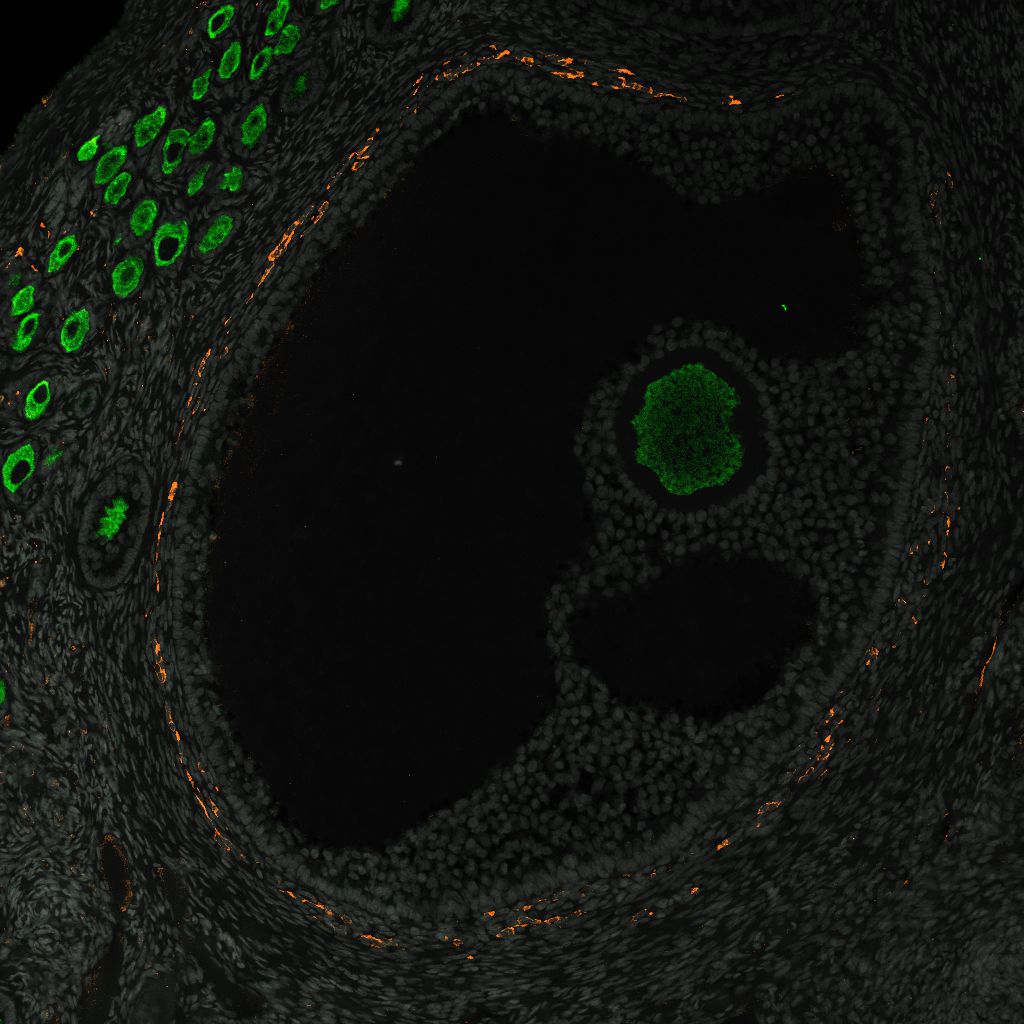
- The Ovary – a primary source of reproductive hormones and gametes. Loss of ovarian function is central to menopause, polycystic ovary syndrome, and primary ovarian insufficiency.
- The Mullerian Duct – encompasses the fallopian tubes and uterus, facilitates implantation and growth of the embryo. This is site of origin for endometriosis, endometrial and ovarian cancers.
Our Solution: A Revolutionary Stem Cell and Organoid Platform for Women
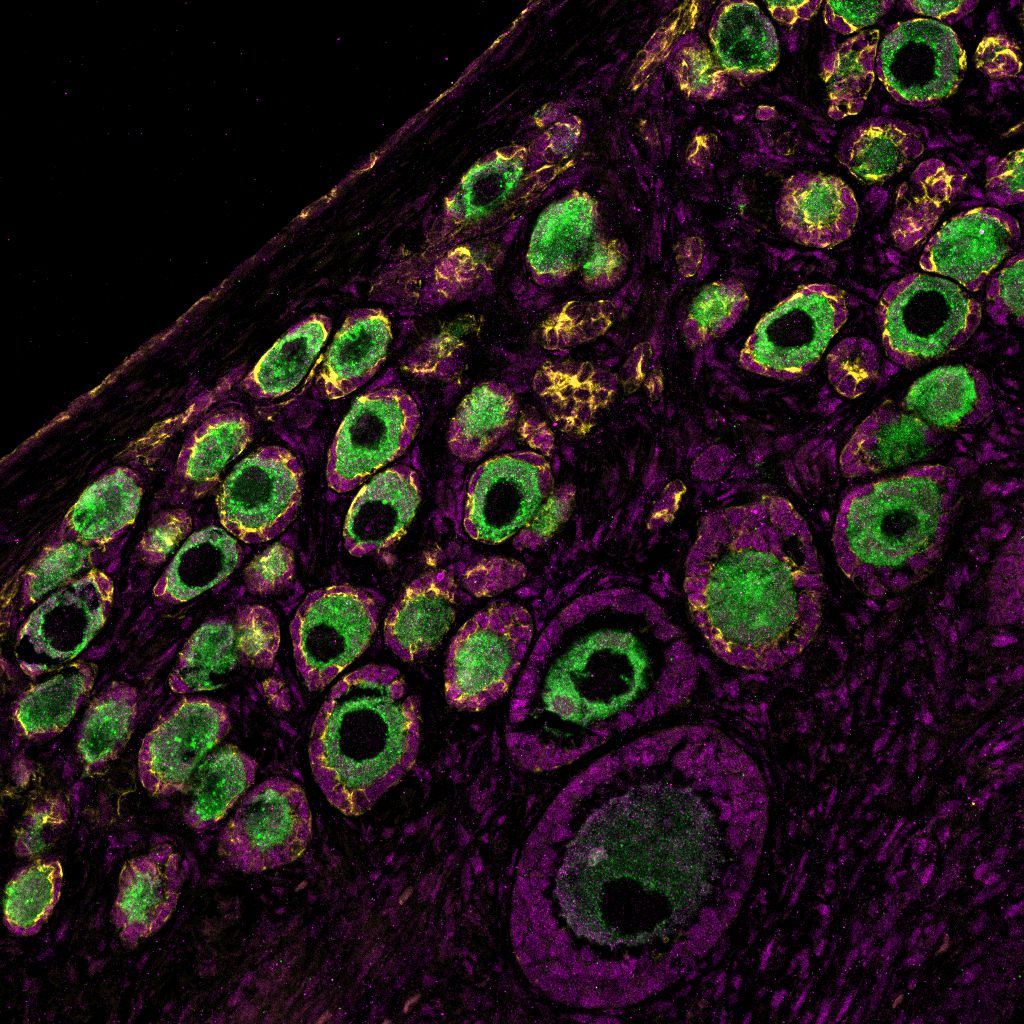
We use stem cell science, organoids and genomics to tackle some of the most pressing and overlooked concerns in women’s reproductive health, fertility and aging. These techniques will help decode the cellular lineage of the mullerian duct and the ovary both during reproductive years and aging, in normal and disease conditions. Simultaneously we will develop model systems derived from human tissue enabling a disease-in-a-dish models for testing therapeutics. Our philosophy is that treating women’s reproductive health concerns must involve upstream scientific innovations created for women with an emphasis on technologies poised for rapid translation to the clinic.
Competitive Advantage
Our scientific team is led by world-renowned researchers and clinicians at UCLA who are passionate about the health and health span of women. The team includes expertise in:
- Women’s reproductive health and care
- Stem cell science and organoid technology
- Genomics
- Medical sociology
- Aging
- Women’s reproductive cancers
Three Revolutionary Applications
1. Transforming Fertility Care
The Challenge: Ovulatory disorders, poor egg and embryo quality, and uterine/fallopian tube problems affect millions, with IVF success rates plateauing at 30-40%.
Our Innovation: The world’s most comprehensive integrated stem cell platform modeling the human ovary, fallopian tubes, uterus, embryo and embryo implantation
Objectives:
- Identify predictive biomarkers for ovarian reserve
- Improve embryo culture success rates
- Reduce implantation failure
- Minimize early pregnancy loss
- Develop in vitro gametogenesis
- Define the mullerian duct progenitor/stem cell compartment
2. Revolutionizing Reproductive Care
The Challenge: Endometriosis takes 7-12 years to diagnose, polycystic ovarian syndrome affects 10% of women, and ovarian cancer is the deadliest gynecologic cancer due to late detection.
Our Innovation: Novel human stem cell and organoid models that accurately represent disease biology, something animal models have failed to achieve.
Objectives:
- Develop early detection biomarkers to accelerate diagnosis from years to months
- Understand unmet needs in endometriosis, PCOS, and cancer patients
- Create personalized treatment strategies
- Enable disease reversal without invasive surgery
- Test environmental factors and genetic influences in controlled human models
3. Extending Women’s Health span
The Challenge: The reproductive system in women ages first, causing hormone fluctuations and health challenges that affect quality of life for decades.
Our Innovation: To integrate our anti-aging discoveries with our revolutionary stem cell and organoid platform technology to intervene in reproductive aging.
Objectives:
- Identify mechanisms of reproductive aging at the cellular level
- Develop science-based strategies to extend women’s health span
- Create therapeutic interventions that delay or reverse reproductive aging
- Develop innovative and more effective therapies for ovarian and endometrial cancers
This platform represents a once-in-a-generation opportunity to transform women’s reproductive health through breakthrough science, addressing both massive market opportunity and profound human need.
About the Core UCLA Team:
Amander Clark PhD. Professor of Molecular, Cell and Developmental Biology. Clark has over twenty years’ experience in stem cell biology, genomics and reproductive science and is a pioneer in the technology of in vitro gametogenesis. She serves as the Director of the UCLA Center for Reproductive Science, Health and Education.
Hannah Landecker PhD. Professor of Sociology and Society and Genetics. Landecker is an award-winning author and expert in science and society, with over 20 years of research experience in the social uptake of biotechnology and women’s lived experience of assisted reproduction.
https://socgen.ucla.edu/people/hannah-landecker/
Sanaz Memazadeh MD/PhD Professor at the David Geffen School of Medicine. Memazadeh is a surgeon-scientist with expertise that span both clinical and basic translational research related to benign and malignant conditions that affect the female reproductive organs. Through her clinical practice she has established a well annotated biobank of clinical material from consented patients which can serve as a platform for procuring resources needed for proposed studies.
https://www.godiscoverylab.com/team
Kathrin Plath PhD, Professor of Biological Chemistry. Plath is an internationally recognized expert with over 20 years of experience in epigenetics. Her research focuses on female-specific processes and leverages stem cell–derived models to investigate infertility. She also is a leading authority on the mechanisms that drive cell fate transitions.